An important Declaration endorsed by over 1500 experts has called upon Indonesia to ratify the lifesaving global tobacco treaty and hold tobacco and nicotine industries liable. The declaration also calls for implementing several other proven measures to protect its children and people from deadly tobacco and nicotine products.
Of all the countries in the world, Indonesia is among one of the only 8 nations globally that has neither signed nor ratified the global tobacco treaty, formally called the World Health Organization Framework Convention on Tobacco Control (WHO FCTC). This treaty was the historic first public health and corporate accountability treaty of the UN health agency, WHO.
It is no surprise that tobacco smoking is shockingly high in Indonesia, resulting in preventable diseases and untimely deaths of epidemic proportions. Indonesia's economic losses due to tobacco-related diseases and lost productivity are colossal.
"Indonesia is facing a severe tobacco crisis that is costing more than IDR 288 trillion every year (over US$ 16 billion) and claiming around 270,000 lives annually. Tobacco use is also worsening Indonesia's tuberculosis epidemic and driving the growing burden of heart disease, stroke, cancer, chronic respiratory disease, and diabetes. Most concerning, millions of children and Gen Z are being relentlessly targeted by tobacco and nicotine marketing. The government must take bold and urgent action by strengthening tobacco control policies, ratifying the WHO Framework Convention on Tobacco Control (FCTC), and protecting public policies from tobacco and nicotine industry interference. Public health, not industry profit, must be the priority," said Dr Tara Singh Bam, noted global health advocate who leads Vital Strategies as Asia Pacific Director for Tobacco Control. Dr Bam was awarded by the Indonesian Ministry of Health for his dedicated contribution to advancing health in the country for almost two decades.
In Indonesia, the situation is deeply alarming - tobacco smoking prevalence is among the highest in the world. In 2023, 28.6% of the population aged 15 and above were active smokers.
High tobacco consumption is a leading cause of death, disproportionately affecting the poor and vulnerable in Indonesia.
Exposure to second-hand smoke remains a pervasive threat. More than 78% of adults and 60% of children are exposed to tobacco smoke at home or in public places.
11th ICTOH Declaration
1524 experts at the 11th Indonesian Conference on Tobacco Control (11th ICTOH) in Surabaya, Indonesia, unanimously endorsed this Declaration. While health ministers of 192 countries are meeting at the 79th World Health Assembly (WHA79) in Geneva, this national meeting has put the spotlight on national and sub-national actions which can be advanced for public health and rights.
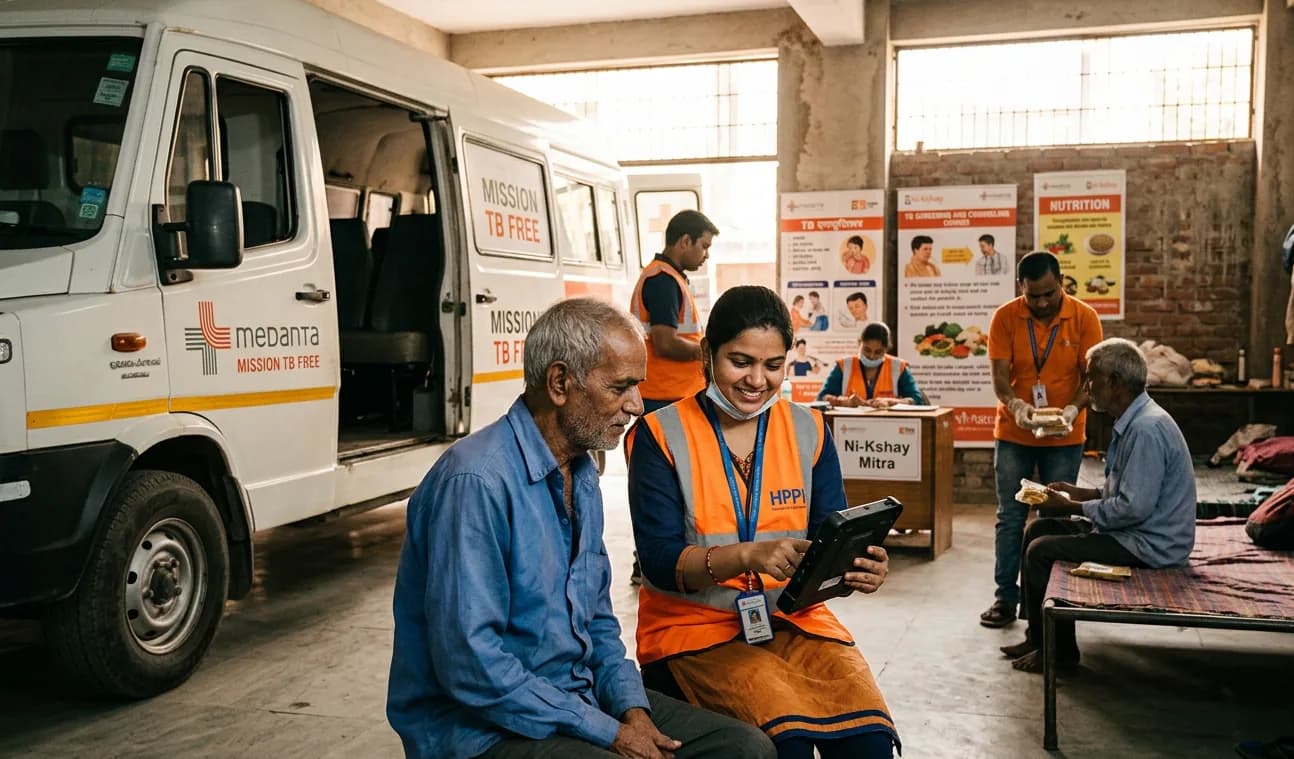
Double trouble: TB and tobacco
Tobacco smoking is a common major risk factor for several deadly non-communicable diseases, such as heart diseases and stroke, cancers, chronic respiratory illnesses, and others. Tobacco smoking is also a strong risk factor for infectious diseases like TB. TB is the deadliest infectious disease globally.
In many TB high-burden countries, malnutrition or undernutrition is the biggest risk factor along with HIV, diabetes, tobacco and alcohol. In Indonesia, tobacco use is the biggest risk factor for TB, as per the WHO Global TB Report 2025.
The 11th ICTOH Declaration also underlines this: “About 319,000 TB cases, or approximately 30% of the total annual tuberculosis burden, are linked to smoking. This poses a serious obstacle to the efforts to end tuberculosis in Indonesia. Existing regulations are insufficient to comprehensively address the tobacco epidemic. Urgent and robust evidence-based action, in line with the WHO global best practices, is needed.”
Key asks
The Declaration calls on Indonesia's national and sub-national governments, parliament and other stakeholders to:
- Ratify the WHO FCTC as a national priority in health and development.
- Comprehensively ban all forms of tobacco and nicotine product advertising, promotion, and sponsorship across all media, including digital marketing, product displays, brand extensions, sponsorships, events, and CSR activities by the tobacco and nicotine industry. As the use of e-cigarettes (or vaping) and heated tobacco products continues to rise, threatening public health, it has to be banned. Such harmful products are rapidly gaining popularity, especially among younger people. Studies show that more than 10% of urban adolescents have tried or are currently using e-cigarettes. According to the Global Adult Tobacco Survey (GATS), e-cigarette use increased tenfold from 0.3% (2011) to 3.0% (2021). Indonesia must ban tobacco and nicotine product advertising, promotion, and sponsorship.
- Increase excise taxes and prices of tobacco products: Increase excise taxes on tobacco products, targeting a minimum of 75% of the retail price as recommended by the WHO and the World Bank, and simplify tax structure to reduce affordability, especially for young people. Nicotine products must be banned as per earlier demand.
- Increase the size of health warnings and standardize packaging: Increase pictorial health warnings to a minimum of 90% and standardize packaging to strengthen health education messages and eliminate industry marketing elements.
- Optimize implementation of smokefree policies: Expand and strictly enforce 100% smokefree policies in workplaces, public spaces, and public transportation.
- Ban e-cigarettes and new tobacco and nicotine products: Prohibit the production, sale, marketing, and use of e-cigarettes, heated tobacco products, nicotine pouches, and other nicotine products.
- Protect public policy from tobacco and nicotine industry interference: Protect tobacco control and public health policies from industry interference by adopting a code of conduct to prevent all forms of interaction and cooperation between government institutions and the industry.
- Optimize smoking cessation support: Integrate smoking cessation into primary care services and strengthen smoking cessation quit-line services.
- In the context of sustainable funding for tobacco control in Indonesia, the Declaration calls for optimizing allocation and use of tobacco excise revenue, sharing funds and cigarette taxes to support tobacco control and farmers for crop diversification.
- Enforce sales prohibition regulations: Implement and enforce bans on the sale of single cigarettes, sales to individuals under 21 years of age, and sales within a 200-metre radius of educational institutions and children's play areas, to cut off purchasing access and protect children from nicotine addiction.
- Create tobacco- and nicotine-free educational environments: Implement tobacco and nicotine-free educational environments at all levels of education by prohibiting use of tobacco and nicotine products, tobacco advertising, promotion, sponsorship, and donations from the tobacco industry.
- Reject tobacco and nicotine industry trade fairs: We strongly urge the central and regional governments to ban the holding of World Tobacco Asia and other similar trade fairs throughout Indonesia.
"Indonesia stands at a critical juncture. The tobacco epidemic continues to claim lives, burden families, and impede national development. We already have the tools and scientific evidence. What is needed now is political will and decisive implementation. We, the participants of the 11th ICTOH, reaffirm our collective responsibility and call on the government and all stakeholders to act boldly and immediately," concludes the Declaration.