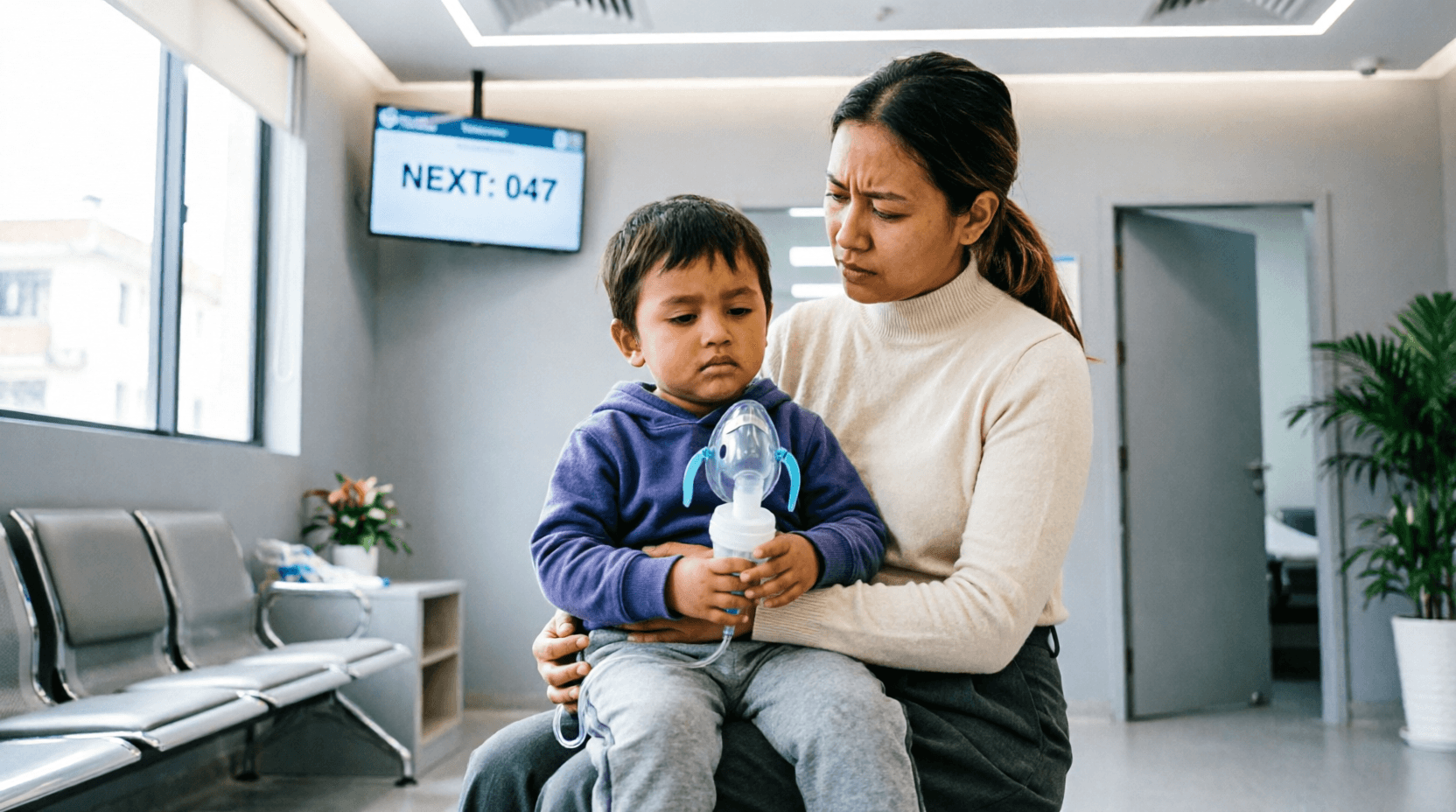
Inside the corridors of Kanti Children’s Hospital in
Kathmandu, the air is often thick with the high-stakes urgency of pediatric
care. Amidst the cries of young patients and the rhythmic, metallic beeping of
monitors, a silent force dictates the pulse of every ward. This force is the ward-in-charge,
a role that serves as the vital bridge between cold administrative oversight
and the deeply human work of bedside nursing. A recent study published in the Journal
of Manmohan Memorial Institute of Health Sciences suggests that for the
most part, the nurses working in these high-pressure trenches view their
leaders with a sense of quiet optimism (Paudel et al., 2026).
Led by Sabitri Kumari Paudel, a research team set out to
quantify something often considered intangible: the perception of leadership
within one of Nepal's most critical tertiary care settings. They surveyed 102
nurses across various departments, from the neonatal intensive care units to
the general surgical wards. Every participant in the study was female, a
statistic that underscores the deeply gendered reality of the nursing
profession in Nepal today (Paudel et al., 2026). Using a sophisticated 22-item
questionnaire, the researchers asked these frontline workers to weigh in on the
qualities of their immediate supervisors, seeking to understand if the people
running the wards were truly providing the support their teams required.
The data paint a picture of a workforce that is generally
satisfied but perhaps still waiting for a more inspired standard of mentorship.
About 57.8 percent of the nurses reported a positive perception of their ward
in-charges, while a substantial 40.2 percent fell into the category of
"fair" perception (Paudel et al., 2026). Only a tiny fraction, just
2.0 percent, held a negative view of their leadership. While these numbers
suggest that the leadership is functional, the large block of nurses in the
middle ground those who see their supervisors as merely adequate- reveals a
significant opportunity for growth. It suggests that while the ships are being
steered safely, the crews may not always feel empowered or truly inspired by
the hands at the helm.
One of the most striking findings of the research was the
lack of correlation between a nurse's personal background and her view of the
boss. In many international medical settings, research has shown that as nurses
gain more education or years of experience, they tend to become more critical
of management (Laschinger et al., 2013). Yet, in the wards of Kanti Children’s
Hospital, this trend vanished. Whether a nurse was under the age of 30 or a
veteran with over 11 years on the job, their assessment of leadership remained
remarkably consistent (Paudel et al., 2026). Even the type of ward made no
statistical difference. A nurse managing a crisis in the emergency room viewed
her in-charge no differently than one working in the more predictable rhythm of
a general medical ward.
This consistency raises a provocative question for the
Nepali healthcare system: is this uniformity a sign of institutional stability,
or is it a symptom of a culture where expectations are flattened by the sheer
weight of the environment? In a country where healthcare systems frequently
grapple with high patient loads and chronic resource shortages, the definition
of a "good" leader might be stripped down to the basics. As the
researchers noted, effective leadership in these settings is "essential
for maintaining service quality and staff engagement" (Paudel et al.,
2026). When the daily reality involves navigating such intense systemic
pressures, a ward in-charge who simply keeps the unit organized and
communicative might be seen as a success, even if they lack the more
transformative leadership qualities seen in wealthier health systems.
The study also touches on a point of tension regarding the
future of nursing education in Nepal. While 72.5 percent of the participants
held a bachelor-level degree, the study found that this higher level of
training did not lead to a more critical or nuanced view of leadership (Paudel
et al., 2026). This contradicts some global findings suggesting that advanced education equips nurses with a more rigorous set of expectations for their
supervisors (Alilyyani et al., 2018). It suggests that in the local context, the
lived experience of the workplace the daily interactions, the shared struggles,
and the direct support during a shift carries far more weight than the theories
learned in a classroom.
Looking forward, the implications for public health policy
and hospital management are clear. If leadership perception is driven more by
workplace interaction than by a nurse's age or seniority, then there is a
clear, actionable path toward improvement through structured development
programs. The researchers recommend that hospital administrations focus on
strengthening "communication, supportive supervision, and team
management" (Paudel et al., 2026). By moving the needle for those 41
nurses who currently view their leadership as merely fair, hospitals can create
a more resilient, motivated workforce. Ultimately, when the nurses feel
supported and heard by their in-charges, the real winners are the children in
those hospital beds, who benefit from a team that is not just managed, but
truly led.