Raising children brings immense joy, but it also comes with moments of worry, especially when a child falls ill. In Nepal, where seasonal changes and environmental factors often lead to common childhood ailments, two of the most frequent challenges parents face are diarrhea and ear infections.
While these illnesses can be distressing, most cases can be managed safely at home with the right knowledge. This guide aims to empower Nepali parents with simple, evidence-based steps to treat these conditions, recognize warning signs, and understand why "more medicine" isn't always the best medicine.
Part 1: Managing Diarrhea and Preventing Dehydration
Diarrhea is one of the most common health issues for children in Nepal. It is characterized by bowel movements that are more frequent than usual, less formed, and waterier. While most diarrhea is mild and brief, the real danger is not the illness itself, but the dehydration (loss of body fluids) it causes.
What Causes It?
Most cases are caused by viruses, such as Rotavirus or Norovirus, which spread easily in environments where children play closely together. It can also spread through contaminated food or water.
The Gold Standard of Treatment: Oral Rehydration
The most critical task for a parent is to replace the water and salts the child is losing.
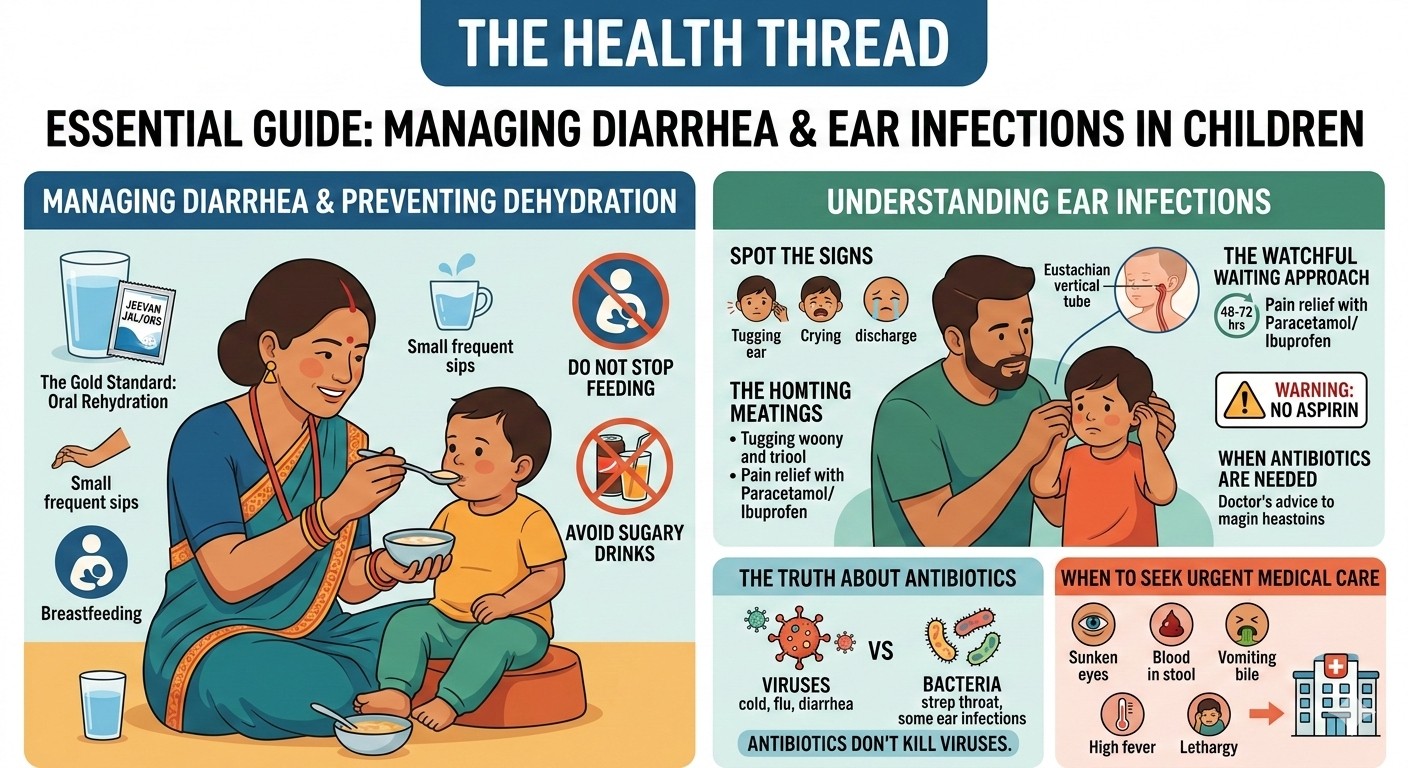
Jeevan Jal (ORS): In Nepal, we are lucky to have widely available Oral Rehydration Salts (ORS), often known as Jeevan Jal. This is a precise mixture of water, salts, and sugar that the body can absorb even during illness.
How to give it: Offer small sips frequently. For babies under 6 months, aim for 30 to 90 mL every hour; for toddlers, 90 to 125 mL; and for older kids, at least 125 to 250 mL every hour.
If they vomit: Do not stop the ORS. Wait 10 to 15 minutes, then try giving small amounts (like a tablespoon) every few minutes.
Feeding During Diarrhea
Many parents mistakenly believe they should stop feeding a child with a "running stomach." This is incorrect.
Breastfeeding: If you are breastfeeding, continue to do so on demand. Breast milk provides essential nutrients and antibodies.
Normal Diet: Once the child is hydrated, continue their regular, healthy diet.
What to Avoid: Do not give sugary drinks like soda, packaged juices, or heavily sweetened tea. These can actually pull more water into the gut and make the diarrhea worse.
Part 2: Understanding and Treating Ear Infections
Nearly five out of six children will have at least one ear infection by their third birthday. In children, the "Eustachian tube"—the small passage connecting the middle ear to the throat—is shorter and more horizontal than in adults, making it easier for fluid and germs to get trapped.
Spotting the Signs
Since young children often cannot say "my ear hurts," look for these clues:
- Tugging or pulling at the ears (though some do this for comfort, it's a sign when combined with other symptoms).
- Crying more than usual, especially at night when lying down increases ear pressure.
- Difficulty hearing or not responding to sounds.
- Fluid or pus draining from the ear.
The "Watchful Waiting" Approach
It may surprise many parents, but 80% of childhood ear infections clear up on their own without antibiotics. Pediatricians often recommend "watchful waiting" for 48 to 72 hours for children over two years old with mild symptoms.
Pain Relief: The priority is making the child comfortable. Use Acetaminophen (Paracetamol) or Ibuprofen based on the child's weight.
Safety Warning: Never give Aspirin to a child, as it is linked to Reye’s syndrome, a rare but life-threatening condition.
When are Antibiotics Necessary?
A doctor may decide antibiotics (like Amoxicillin) are needed if the child is under two years old, if the infection is in both ears, or if the symptoms are severe and not improving after a few days.
Part 3: The Truth About Antibiotics
In Nepal, there is often a cultural pressure to ask for antibiotics for every fever or cough. However, understanding the difference between viruses and bacteria is vital for your child’s long-term health.
Viruses: Cause the common cold, flu, and most sore throats and diarrhea. Antibiotics do not kill viruses.
Bacteria: Cause things like strep throat and some ear or skin infections. Antibiotics only work here.
The Danger of Overuse: If we use antibiotics when they aren't needed, the bacteria in our community learn how to "fight back." This is called antibiotic resistance. This means that in the future, when your child has a truly serious infection, the medicine might no longer work.
Part 4: When to Seek Urgent Medical Care
While most of these illnesses pass with home care, parents must stay alert for "red flags." Seek a doctor or visit a hospital immediately if your child shows any of the following:
For Diarrhea/Dehydration:
- No urine/wet diapers for more than 8 hours.
- Sunken eyes or a sunken "soft spot" on a baby's head.
- Bloody or black stools.
- Vomiting green bile.
For Ear Infections/General Illness:
- High fever (above 104°F or 40°C) that doesn't come down with medicine.
- A stiff neck or severe headache.
- Difficulty breathing or very fast breathing.
- The child is unusually sleepy, limp, or hard to wake up.
Part 5: Simple Prevention for the Whole Family
The best way to treat an illness is to prevent it from starting. In our busy Nepali households, a few habits can make a huge difference:
Handwashing: This is your family’s "superpower". Wash hands with soap and water for 20 seconds after using the toilet, after changing diapers, and before preparing food.
Vaccinations: Ensure your child is up to date with the national immunization schedule. Vaccines for things like measles, flu, and pneumonia significantly reduce the risk of secondary ear infections.
Clean Water: Always use boiled or filtered water for drinking and mixing ORS.
No Smoking: Keep children away from cigarette smoke. Exposure to second hand smoke significantly increases a child’s risk of chronic ear infections and bronchitis.
Conclusion
As a parent, your observation is the most powerful tool. By focusing on hydration during diarrhea and managing pain during ear infections, you are giving your child’s body the best chance to heal. Trust in the process of "watchful waiting" when advised by a professional, and remember that Jeevan Jal, rest, and love are often the most effective medicines of all.