Two health and gender rights
leaders delivered a stark assessment of what happens when major external
funding disappears overnight, and organized opposition fills the vacuum. The
sudden withdrawal of the US government's funding support has not merely reduced
services- it has fractured health systems, emptied pharmacy shelves, driven up
unplanned pregnancies and unsafe abortions, and enabled anti-rights groups.
"Shelves go dry":
The immediate collapse of care
Nelly Munyasia, Executive
Director of the Reproductive Health Network Kenya (RHNK), did not soften her
language. “We saw shelves go dry,” she said. When the US Agency for
International Development (USAID) stop-work order took effect in January 2025,
a system that had long operated in silos simply stopped functioning. HIV
treatment, lifesaving antiretroviral refills, routine check-ups, counselling
and testing outreaches, and community-based services for women, girls and key
populations came to a standstill.
Munyasia described a
healthcare architecture that had become dependent on a single external agency.
“USAID had a siloed approach to providing HIV care. If you walked into a health
facility, you found a siloed way of providing HIV treatment. When they left, that
collapsed - the services that were provided, the medicines, the ARVs, the
checkups, the referrals, the routine checkups - all that collapsed.”
The impact was not limited to
HIV. Family planning commodities also disappeared. Outreach programmes that had
taken testing and counselling into communities came to a halt. The result, she
said, is a health system "coming down on its knees."
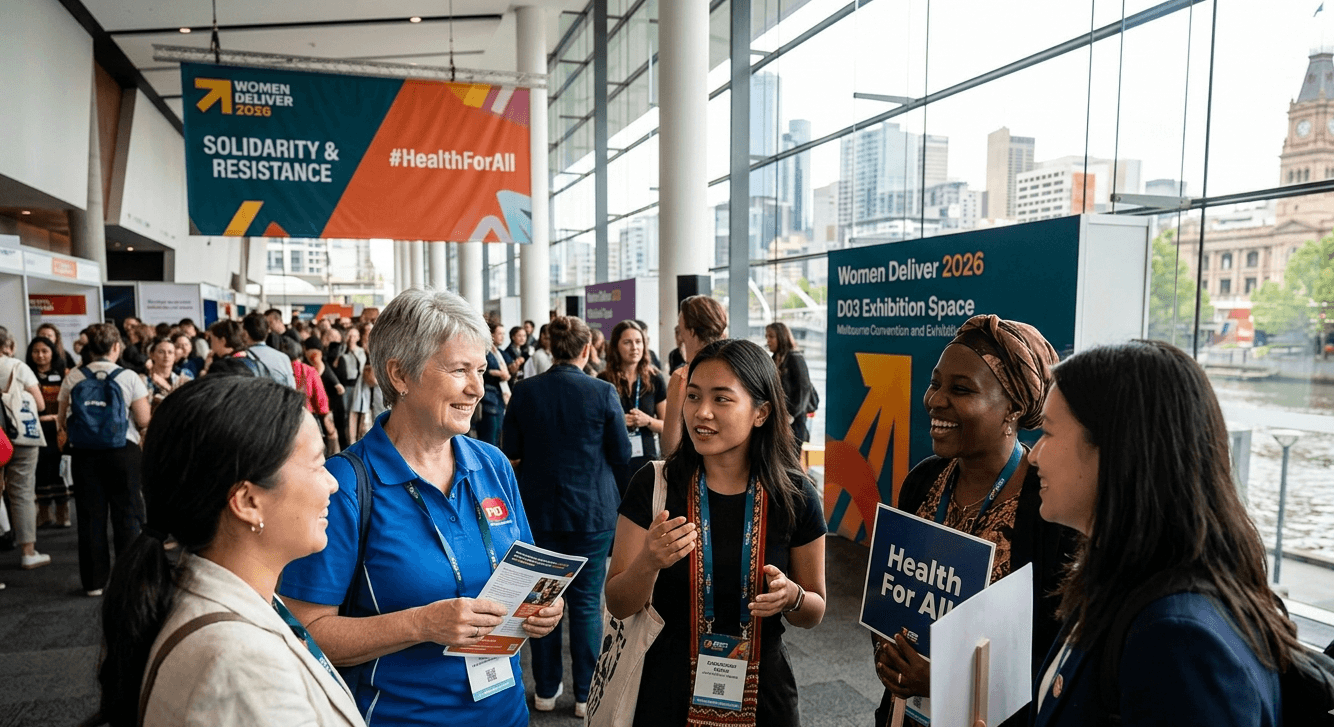
Nelly was speaking in the SHE
& Rights session hosted at the 26th International AIDS Conference (AIDS
2026) by Global Center for Health Diplomacy and Inclusion (CeHDI), CNS and
partners.
Rising pregnancies,
reinfections and girls arriving with ruptured uteruses
The human cost is already
measurable. In the second last week of July 2026, RHNK, working with the
Ministry of Health Kenya, the National Council for Population and Development,
IPPF and other partners, launched a baseline survey in five counties. The early
findings are alarming: increased numbers of pregnancies, rising HIV infections
and reinfections, and a sharp rise in reported cases of unsafe abortion.
"Girls are walking to
facilities with ruptured uterus. They are walking to facilities bleeding almost
to death," Munyasia stated. She rejected any attempt to treat HIV in
isolation. “We cannot talk about HIV in isolation. We need to make sure that we
are addressing what is the root cause of the issues we continue to see now.”
The same adolescent who needs
HIV prevention also needs contraception, safe abortion care when necessary,
protection from gender-based violence, and non-judgmental services. When those
services vanish or become inaccessible, the consequences appear across every
indicator.
Anti-rights groups move into
the vacuum
Munyasia was equally clear
that the funding collapse has been accompanied by a calculated political and
social offensive. Organized anti-rights and anti-gender groups are
"leveraging on everything that is happening globally and now narrowing it
and bringing it down." They promote narratives that claim to 'Africanise'
values while, in her words, perpetrating hate. "African is not hate.
African appreciates and recognizes everyone in their diversity."
The practical effects are
already visible. Some organizations that once worked on sexual and reproductive
health and rights have dropped the word "rights." Governments that
previously positioned themselves as champions of diversity, equity and
inclusion have gone quiet. The word “gender” is being scrubbed from websites.
Healthcare providers face heightened surveillance, harassment and even arrest
for offering safe abortion care or services to LGBTQI people and adolescents.
Community-level harassment of
the LGBTQI community has intensified. Healthcare workers who continue to
provide care operate in a climate of fear. "This really creates an
environment that is very hostile for this population that so much needs care,"
Munya said.
She insisted that the response
cannot be limited to monitoring the opposition. “We are just not monitoring
opposition… but we are answering the critical question ‘so what?’, because
services must be provided, policies must be developed, and we must continue to
create an enabling environment for the populations that we serve to thrive.”
Four pillars to rebuild: A
practical roadmap from the ground
Dr Edison Omollo, Programme
Director at RHNK, outlined the concrete strategy the organization and its
partners are pursuing to fill the gap left by USAID. He listed four
interconnected pillars.
First, building an
intersectoral movement for sustainable sexual and reproductive health and
rights. No single group can replace donor funding. RHNK is convening national
and regional coalitions that bring together not only health actors but also education,
gender and finance ministries and civil society. The goal is alignment with
government systems rather than parallel structures. Positioning sexual and
reproductive health and rights (SRHR) as a development, education, economic and
gender equality issue - and not merely a health issue - is central to this
effort. Domestic resource mobilization, Omollo emphasized, requires finance
actors at the table.
Second, strengthening
government systems instead of creating parallel programmes. RHNK itself has
shifted from multiple parallel projects to a single strategy that supports
government priorities. The organization is assembling a “winning coalition” of
actors, each contributing complementary strengths so that public systems are
reinforced rather than competed with. “It is only the government system that can
deliver at scale,” Omollo noted.
Third, genuine integration of
services. Communities do not experience health problems in isolation, and
neither should the health system. RHNK is pushing for a continuum of care that
combines SRHR, HIV services, contraception, maternal health, gender-based
violence response, cervical cancer screening and self-care. Omollo argued
that treating a girl in silos is both inefficient and ineffective.
Fourth, investing in digital
health innovations and self-care. The funding collapse demonstrated that many
needs can be met outside congested facilities. Digital tools offer
confidential, non-judgmental pathways for information, self-care and referral networks
that connect people to appropriate public or private providers. For
gender-diverse individuals especially, the ability to access care from home
expands reach and protects bodily autonomy. Digital innovation is presented not
as a replacement for health workers but as an extension of their reach.
A system that must serve the
whole person
Both Nelly and Omollo returned
repeatedly to the same core insight: the people most affected - adolescents,
women, sex workers, LGBTQI communities - cannot be segmented into disease
categories or funding streams. An adolescent seeking HIV services might also
need contraception, might be at risk of gender-based violence, and might face
stigma that keeps her away from facilities. When the system collapses in silos,
she falls through every gap.
Munyasia put it bluntly:
healthcare providers cannot open a facility and declare they will only provide
HIV care. The work of rebuilding must therefore be holistic, rights-based and
firmly anchored in national systems rather than external parallel structures.
The Kenyan experience is not
isolated. Across many countries that once relied heavily on external HIV and
reproductive health funding, similar patterns of service disruption, commodity
shortages and opportunistic anti-rights mobilization are emerging.
I, as the SHE & Rights
host, said in the session that progress toward the 2030 targets on ending AIDS
is already under threat from a broader backlash against health and gender
rights. With only 54 months remaining, the testimonies from Kenya serve as both a warning and a call to action. The response must be integrated,
domestically owned, and unapologetically rooted in the rights and leadership of
those most affected.
The shelves are dry. The
numbers are rising. The opposition is organized. The question now is whether
the global AIDS response and the governments and movements that sustain it will
match the urgency of the crisis unfolding on the ground.